Fog And Wind from Movement + Hop Butcher For The World

Hazy IPA · 7% ABV · Hops: Citra, Peacharine, NZ Cascade, Krush Cryo, Kohia Nelson · Fog And Wind on Untappd

Reviewed: October 11, 2026 (inferred from the Apple Note’s creation date; no separate tasting date was written).

Made w/ Citra, Peacharine, NZ Cascade, Krush Cryo, and Kohia Nelson

— Movement Brewing Co.’s description on Untappd

The beer is pale yellow, cream beige in color, opaque, fully hazy. Foam is medium fine and rich. The beer doesn’t smell that citrusy, showing birch sap, willow leaves, white peach, white grapes, gooseberry (lol, is this the season for gooseberry?), sweet orange, lemon, pineapple, and mango noses. I think it smells more fruity when it touches oxygen and warms up. But if I sniff it from far to close, the birch or willow tree sap’s nose comes back up. If I sniff close, moving left and right, then I get more tropical fruity noses. The gooseberry noses are often observed when NZ hops are used, very interesting.

The beer is lightly sweet, subtly tart, very low in bitterness, medium bodied, creamy and frothy, smooth, with no hop burn. The fruitiness rushes to my mouth and floats up to my head. The beer shows marmalade, limoncello, pineapple, mango, jammy orange, peach preserves, subtle raspberry, orange juice, tangerine, lemon drops, gooseberry, passion fruit juice, and white grape aromas. The fruitiness is airy, juicy, tropical, floral, very nice. The aftertaste is zesty, with lemon peel, lime, peaches, gooseberry, tea leaves, grape vines, hemp, and evergreen forest aromas, very floral and leafy.

Movement Brewing Co. and Hop Butcher For The World bring a great beer, showing a super aromatic hazy IPA, airy, juicy, NZ hoppy. The good thing is the layers of changing hop characters are laid on a clean and airy canvas, so there’s space for them to show up and go. The birch and willow sap aroma is interesting; not sure where it’s from. It might be the Peacharine? I think I missed the strong ester fruitiness at the back; it’s more obvious when it warms up. I can sense a good amount of pineapple, vanilla orange creamsicle, bubblegum, orange liqueur, candied orange peel, orange hard candy, Turkish dried apricots, marmalade, and pineapple passionfruit fruit preserve aromas.

Untappd listed this beer at 4.36/5 from 29 ratings when checked on October 12, 2026 (UTC). That is a snapshot of Untappd user ratings, not my own score.

Beer review critics

Two beer-drinking perspectives on these notes. Their challenges are separate from my own impressions.

Gemini — Gemini 3.1 Pro (High), via Antigravity CLI

What convinces me. You clearly distinguish the beer's frothy, creamy palate texture from its buoyant aromatic airiness in the glass, never confusing physical mouthfeel with perceived scent. Tracking the progression from sappy, leafy birch notes into ripe tropical fruit captures an engaging, dynamic sensory experience.

Where I'd push back. The sappy leaf-to-tropical aroma is interesting, but sniffing closer and beer warming happen at the same time; they cannot be separated in your current observation. I would also challenge certainty gently regarding ingredient origins: wondering if Peacharine caused the birch and willow or later suspecting yeast ester fruitiness overreaches. With multiple expressive hops coexisting, attributing specific characters to isolated recipe components remains speculative. Public check-ins merely call the beer thick and juicy or smooth and clean, which is not a flavor consensus. Focus on what your palate learns directly from the glass rather than trying to reverse-engineer the brew.

Next glass. Conduct a concrete split-glass experiment. Pour two glasses simultaneously; leave one chilled while letting the other sit at ambient room rest. Sample both side by side at identical sniffing distances to isolate proximity from warming, observing how the botanical and tropical aromatics genuinely evolve.

— Gemini, independent critique of this review, Gemini 3.1 Pro (High reasoning).

ChatGPT — OpenAI GPT-6.1 Sol, via Codex CLI

What works. The leafy, sappy opening gives the later tropical fruit a useful reference point. Your account becomes especially interesting when birch and willow return with a change in sniffing distance: that complicates a simple warming-driven progression. Soft, creamy texture and low bitterness also explain how the beer can feel gentle while suggesting citrus peel and candy. Citrus aroma, tartness, and bitterness deserve that separation.

Where I'd question. The long fruit lists make relative intensity difficult to follow. Which impressions define the beer, and which flicker briefly? “Airy” also needs clarification beside creamy, frothy, medium-bodied texture. Two public check-ins describe “Very thick and juicy” and “smooth, clean and flavorful”: useful context for mouthfeel, but neither settles your observations. Likewise, 4.36/5 from 29 ratings is a reception snapshot, not flavor evidence.

Peacharine is a plausible question, not an established explanation for birch or willow within a five-hop blend. Bubblegum becoming clearer with warmth does not establish yeast as its source; calling it ester fruitiness risks making the attribution sound firmer than the observation.

Next tasting. Pour equal samples into identical glasses. Keep one cooler and let one warm, recording temperatures and elapsed time. At each stage, repeat the same distant and close sniffs before tasting. Track just sap/leaves, tropical fruit, bubblegum, citrus, texture, and bitterness. This could test the progression while leaving ingredient attribution open.

— ChatGPT, OpenAI GPT-6.1 Sol (high reasoning), independent critique through Codex CLI. Source context: brewery description and limited Untappd check-ins.
Zahm Riips from Shred Beer + Riip Beer Co

West Coast IPA · 6.7% ABV · Hops (as written in my notes): Mosaic, Nectaron, Neon, Columbus Cryo · Zahm Riips on Untappd

Reviewed: October 11, 2026 (inferred from the Apple Note’s creation date; no separate tasting date was written).

Collab with our buds at Riip Beer Company.

Mosaic, Nectaron, Nelson, and Columbus Cryo hops showcase intense flavors and aromas of plushberry, ripe mango, and sticky terpenes.

— Shred Beer Company’s description on Untappd

My notes say “Neon”; the brewer’s description says “Nelson.” I haven’t confirmed whether my note is a typo or describes a different batch.

The beer is pale golden, bubbling from the bottom, transparent. Foam is medium coarse, a finger high, lacing. The beer smells refreshing, showing peach slices, citrus power, lemon drops, tangerine, orange and some gooseberry noses. The smells are zesty, fruity, slightly dank. It tastes lightly bitter, subtly sweet, dry, medium bodied, fizzy. The water is soft, showing a slightly syrupy texture, not showing the soapy or subtly salty softer-water texture a lot of Shred Beer Company beer shows.

It shows leafy, evergreen, pine forest after rain, grapefruit peel, cold-extract green tea, steamed lotus roots, earthy tree leaves, subtle caramel, simple syrup, lemon peel, orange zest, gooseberry, okra green, tomatillo, peach wedges, green papaya, green mango, light diesel, subtle hemp aromas. It’s a bit sweeter, but still pretty dry, very aromatic. The aftertaste is hemp, leafy greens, cold-brew green tea, lotus leaf, gardenia floral, citrus blossom, quite floral and aromatic too.

It’s a slight variation of other similar Shred beers: a high-quality, aroma-driven approach. But the bitterness level is not low; I guess this is a wet-hop iteration? Showing a lot of traits Shred is good at, and also showing some caramel, simple-syrup characters, it stays very aromatic, which is very satisfying! This beer is a collaboration with Riip Beer Company.

Untappd listed this beer at 4.18/5 from 252 ratings when checked on October 12, 2026 (UTC). That is a snapshot of Untappd user ratings, not my own score.

Beer review critics

Two beer drinkers respond to these notes without changing the review above.

Gemini — Gemini 3.1 Pro (High), via Antigravity CLI

What works. Your sensory timing captures a clear aromatic arc, tracking an initial rush of bright citrus power and peach into a layered contrast between green aromatics (pine, steamed lotus root, okra) and ripe orchard fruit. Definitely keep that personal botanical imagery; descriptors like tomatillo and green papaya pin down savory hop dimensions far better than generic beer vocabulary. Your palate structure notes also hit true on the finish, observing how delicate floral lift and earthy green tea linger once the lively carbonation settles out.

What doesn't quite add up. Two interpretive leaps warrant skepticism. Inferring soft water profile from a slightly syrupy texture confuses mineral chemistry with body and residual sugars. Additionally, guessing this is a wet-hop beer because bitterness isn't low clashes with your opening impression of a "lightly bitter" sip. That shift sounds like palate accumulation over time rather than fresh-hop character. Also, keeping "Neon" marked as uncertain alongside brewery "Nelson" is smart; without verification, neither should be assumed.

What I'd pour next. Try a temperature-step tasting experiment: pour half into a glass at cellar temperature while keeping the rest chilled. Tracking how herbal bitterness and sweetness evolve as the cold recedes will reveal whether that syrupy feel is strictly thermal.

— Gemini, Gemini 3.1 Pro (High reasoning), new critique of this review.

ChatGPT — OpenAI GPT-6.1 Sol (high reasoning)

What works. Your nose-to-finish progression is compelling: peach and bright citrus give way to leafy, tea-like, floral impressions. Lotus root, okra, and tomatillo are useful sensory anchors, not descriptions needing translation into standard IPA vocabulary. They suggest distinctions worth pursuing: vegetal freshness, earthiness, or slippery texture. The restrained sweetness also complicates the brewer’s ripe-mango framing without invalidating either account.

What I'd challenge. “It shows” blurs sniffed aroma, flavor during the sip, and lingering finish. Are peach and gooseberry actually tasted, or mostly smelled? Does the finish retain citrus, or become predominantly herbal?

“Lightly bitter” and “the bitterness level is not low” need a bridge: perhaps bitterness builds, or becomes clearer after sweetness fades. Dryness, bitterness, and sweetness can coexist, but their timing matters.

“Soft water” reads like a composition claim inferred from mouthfeel. Describe the softness as perceived texture instead. Medium body, fizz, and slight syrupiness are compatible; explain how they interact.

Leafy intensity alone doesn’t establish wet-hopping. Likewise, keep “Neon” versus the brewer’s “Nelson” unresolved rather than assigning particular flavors to an uncertain hop list.

Next tasting. Compare aroma before sipping with retronasal impressions after swallowing. Track sweetness, bitterness, and drying sensation separately through the finish. Revisit the botanical notes as it warms: which persist, and which become texture rather than flavor?

— ChatGPT, OpenAI GPT-6.1 Sol (high reasoning), independent critique with the brewery description provided as context.

Coldergeist from Movement + Geisthaus

West Coast pilsner · 5.4% ABV on the can · Hops: Mosaic, Nectaron, NZ Cascade (Coldergeist on Untappd)

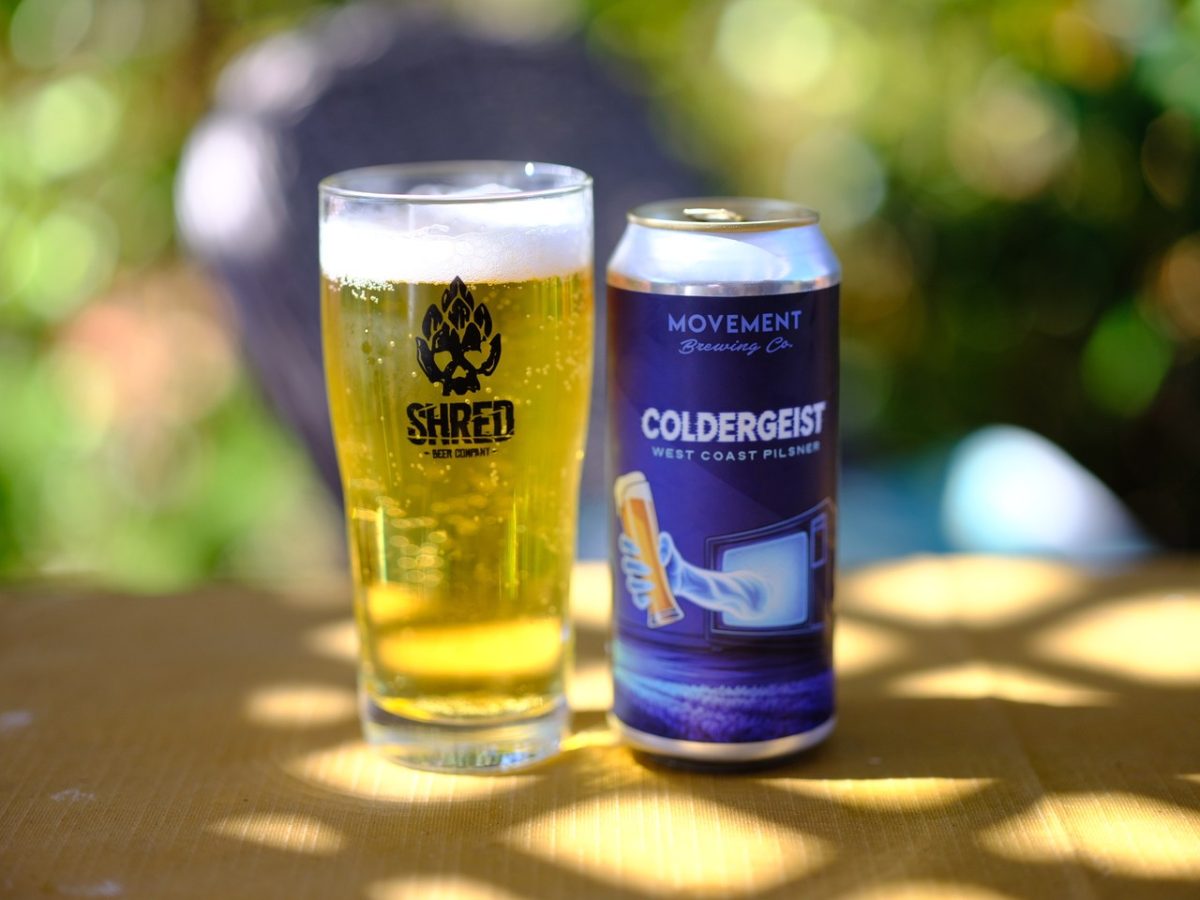
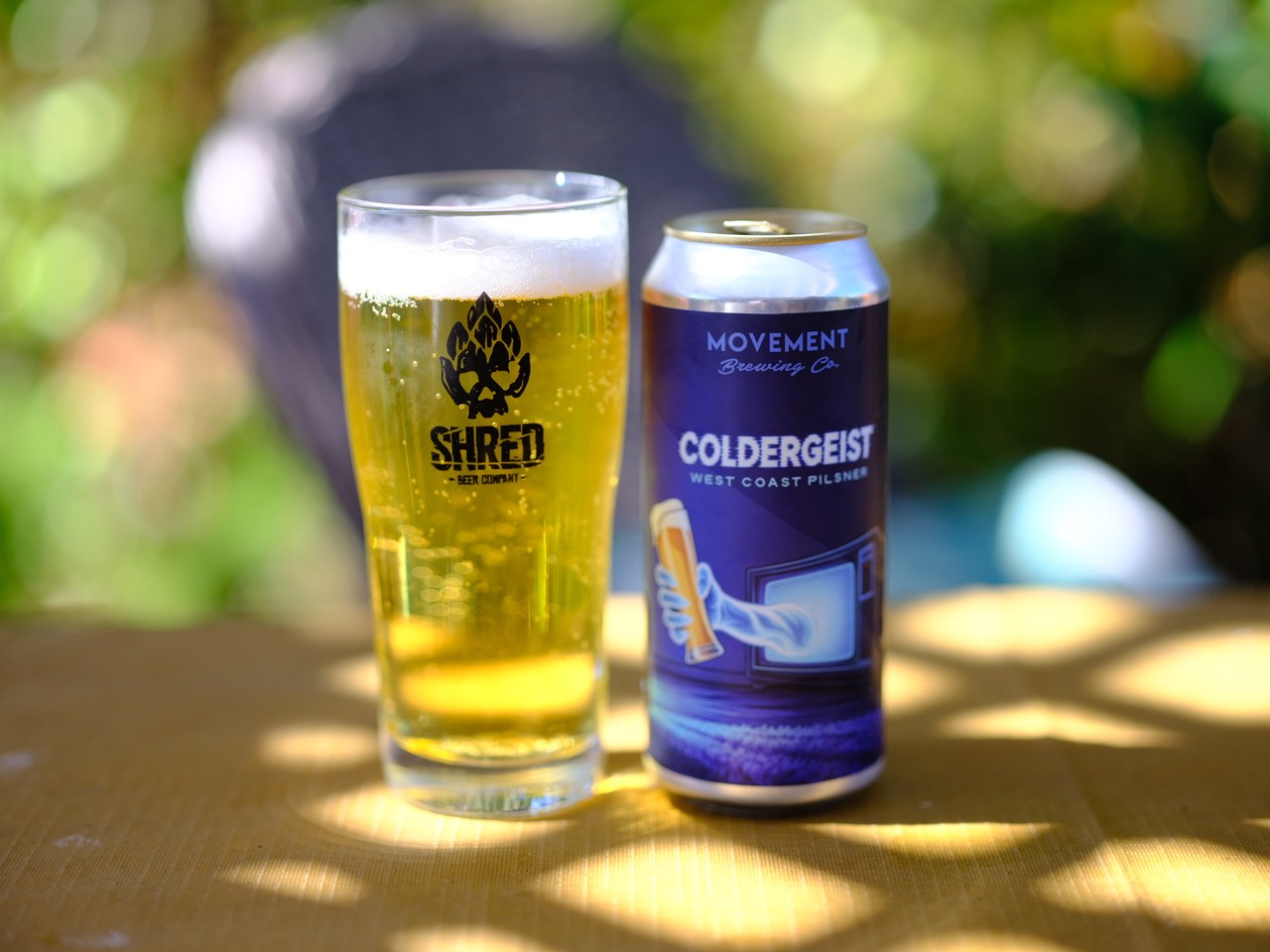
A glass of golden Coldergeist beside its purple can, front label visible

WC Pilsner Collab with Geisthaus Brewing Company 5.5%: We invited our buds over for a hang session to blend what we are best at; Crispy pilsners and snappy hop bombs. Coldergeist had one mission, “Make it stink”, so we tossed in a bag of Columbus Cryo for some OG dank cannabis notes. Then, we dry hopped again with our house Mosaic, NZ Cascade, Nectaron, and Nectaron Subzero Hop Kief for notes of blueberry, passionfruit lemonade, and fresh fruit zest.

— Movement Brewing Co.’s description on Untappd

The can says 5.4% ABV; the description on Untappd says 5.5%.

The beer is golden, showing light haze, bubbling like a fountain. Foam is coarse, relatively thin, and disappears quickly. The beer smells like a diesel-powered engine, super dank and weedy, showing soursop, gooseberry, white grape flesh, newly cut cactus, weed and diesel—no burnt-rubber diesel byproduct, but a very dank fruity nose. If you tell me this is a West Coast IPA, I will totally believe you.

The beer is medium bitter, bone dry, not sweet, light to medium bodied, showing a bit more body than a lager, but also crisper than a West Coast IPA. It’s very hoppy; normal people probably can’t tell the difference between a hoppy West Coast lager and a cold IPA. The beer shows a grassy beginning, evergreen, earthy herbal vines like grape vines, bursty gooseberry, weeds or hemp, grapefruit peel, dried orange peel, subtle guava, subtle cumin, crispy apple slice, hairy crunchy peach slice, and subtle blueberry aromas. The aftertaste is very floral, showing stone fruit, citrus blossom, gooseberry, tangerine and lemon juice aromas.

Coldergeist beside a glass, showing the side of the can with its hop list

This beer is outstanding: so many hop aromas dipped into a calm, chill, reflective pond. You get layers upon layers of dry-hopping characters which amplify the aromas of hops, maybe transformed by yeast. The result is impressive leafy dank, fruity and floral aromas. I know it says West Coast pilsner, but somehow the bone-dry experience recalls cold IPA to me, most likely because they are similar styles. Movement Brewing Co. and fellow Sacramento-area brewer Shred Beer Company share some similarities in being masters of modern beer styles; their aromatic West Coast IPAs are phenomenal. And in this beer Movement brings the rising star of lager-specialized brewers, Geisthaus Brewing Company; no doubt this will be a beer everyone wants to have a taste of. I think it delivers an even better beer than I imagined.

I doubt this beer is for everyone, but for a person who loves the diversity and quality of beer, this one brings both, and beyond your imagination! The bitterness is necessary to bring a clean palate to show you the layers of character of hops, blurring the line between IPA and pilsner. When I think of Czech pilsners, they do have this bitterness attached, but they show a simple structure, lacking the layers of romantic hop waves. This one is different: it’s like a song for beer lovers. You sit at a reflective pond, enjoy the layers of cool hop characters, pin each butterfly, distinguish their species, and let them go. You just get the satisfaction of this forestry, reflective environment, calm and showing good clarity—definitely a pond I’d like to visit at night or on a weekend.

Coldergeist glass and the side of the can showing the 5.4% ABV label

Beer review critics

Two different readers of this tasting note: one excited by how closely its aromas echo the brewer’s intent, the other asking where the comparisons and conclusions need more testing. These are their perspectives, not changes to my tasting notes.

Gemini — earlier critique of this review

Your Take: You immediately called out the "diesel powered engine," "super dank and weedy," and "hemp" notes, noting it was so dank you'd believe it was a West Coast IPA.

Movement and Geisthaus explicitly stated that the mission for Coldergeist was to “Make it stink.” To achieve this, they loaded it with Columbus Cryo hops specifically to produce what they called "OG dank cannabis notes".

Your Take: Beneath the dankness, you found soursop, gooseberry, crispy apple, hairy peach slice, and—most impressively—"subtle blueberry aromas."

You noted it was "bone dry," "crispy," and blurred the line between a West Coast Pilsner and a Cold IPA.

This is a beautiful piece of beer writing.

— Gemini, selected excerpts from an earlier critique of this beer; its model and reasoning mode were not recorded.

ChatGPT — OpenAI GPT-6.1 Sol (high reasoning)

What works. Golden color, light haze, fountain-like carbonation and short-lived coarse foam give me an actual glass to imagine—not just “crispy” branding. The dank nose followed by a floral, citrus-and-stone-fruit finish gives the tasting a useful trajectory. Medium bitterness, bone dryness and light-to-medium body also explain why the hops might feel vivid without syrupy weight.

What I'd challenge. “More body than a lager” sets a slippery baseline: lagers span substantial territory. West Coast pilsner and cold IPA labels can overlap, but dryness alone doesn’t settle the comparison. And Czech pilsners aren’t necessarily structurally simple; malt, herbal hops and bitterness can create layers without tropical-fruit fireworks.

I’d also question whether bitterness necessarily “cleans” the palate. Lingering bitterness and drying astringency deserve separate attention. The supplied public check-ins offer just one relevant comment—“slightly astringent on the back end”—not a community consensus.

The fruit vocabulary isn’t objectively right or wrong. My writing concern is hierarchy: which sensations dominate, and which flicker? The pond metaphor conveys calm, but the long inventory sometimes obscures that structure.

What I'd try next. Revisit it cold, then warmer, tracking aroma, bitterness and mouth-drying grip separately. Does the grassy opening soften while the floral finish expands?

Keep the cactus and hairy peach; give them timing and intensity. Compare your impressions with the brewery’s intended cannabis, blueberry and passionfruit-lemonade notes as marketing prompts, not independent confirmation. Any yeast-driven transformation remains a hypothesis, not something this tasting establishes.

— ChatGPT (OpenAI GPT-6.1 Sol, high reasoning), a new critique of this beer based on the review, the brewery description and limited public check-ins on Untappd.

Gemini’s enthusiasm and ChatGPT’s challenges are opinions about the review, not independent proof of the beer’s brewing process.

Swap Meets from Monkish

DDH DIPA · 8.5% ABV in my notes · “TRADING POST” · Swap Meets on Untappd

Reviewed: October 4, 2026 (inferred from the Apple Note’s creation date; no separate tasting date was written).

Double IPA with Nelson, Citra, Mosaic, and Galaxy hops.

— Monkish Brewing Co.’s description on Untappd

My notes say 8.5% ABV; the current Untappd listing says 8.3%. I can’t verify whether these refer to different batches.

The beer is pale yellow, pale beige in color, opaque, very hazy. Foam is coarse, about a finger high, disappears quickly, showing a bit of lacing. The beer shows pineapple, mango, orange, lemon tart, lemon peel zest, vanilla orange creamsicle, white grape, pine cone, grape vines noses. The beer is light to medium sweet, subtly bitter, subtly salty, full bodied. If you drink it moderately slowly, there’s no hop burn. The beer shows marmalade, lemon peel, citrus oils, orange, tangerine, gooseberry, pine resin drops, grassy lands, hemp, weed oil, Jolly Rancher tangerine hard candy, lemon drop cough candy, grape vines, pungent citrus peel, white grape, tea leaves aromas. The aftertaste is white grapes, grapefruit peel, resin, cedar wood, soursop, wild arugula, lime zest aromas.

TBH, this beer gets me puzzled. I feel I mostly get Citra from this beer, but apparently there’s Galaxy’s white grape, soursop, gooseberry aromas; Mosaic brings some wild arugula, grape vine, and almost weedy aroma, and Nelson is supposed to be more dank, but maybe it leans to the white grapes. But you will also get all these fruits from Citra when it’s wet. So I don’t know. This is a little bit of everything. It’s sweeter than the Pokemonk I just had, showing a bit more salty-water flavor, more body.

I appreciate the sugar-free, sour-reduced soursop, which always gives me an ester-heavy exotic fruity experience. You can also say that might be a funky gooseberry aroma; they are similar because I don’t have these fruits in real life. They also give something like lotus-like floral, muscat-shine white grape, or funkier white grape peel aromas, which can later turn to a weedy ending, grape-vine-like, wild arugula when it’s spicy and funky. Aromas, smells are super vague, ever-changing. When I say these words you might laugh at me, because you may challenge: when is the last time you had any of these? But with so many years of tasting, sensing, writing down the experience, I start to laugh at myself when I’m influenced by the alcohol and trying to land on a moving target. Did I really sense any of these, or did I just calibrate this to a void from the internet and call this wet dream real? I don’t know. This is a good beer; I probably would say 4.2/5 using my imaginary Untappd scoring standard, but it was saying 4.4/5 on Untappd when I wrote this, so I’m puzzled: did I miss something, or maybe I don’t like the aggressive funky and weedy feeling of Galaxy, too much wild gooseberry? Nelson used to be more diesel-powered; this beer shows none, but the white grape is also where the Nelson Sauvin name comes from, so I can call that what I get from this sample of Nelson? But then if you know recent batches of Monkish Brewing Co. beer, they used wet Citra, which shows all these wild aromas borrowed from its cousins, and you can’t tell who is who without looking at the name tags. Mosaic feels like the mother of these vineyard dankness, white grape, dank herbs but fruity aromas. So I must say, maybe this is 50% from my mouth and nose, and 50% from the imaginary smoothness of my brain.

Untappd listed this beer at 4.37/5 from 6,093 ratings when checked on October 12, 2026 (UTC). That’s a current snapshot of Untappd user ratings, not my score or the historical 4.4/5 I recorded in my note.

Beer review critics

Two different responses to the same beer: both take the tasting seriously, while questioning whether hop names and public scores can settle what was in my glass.

Gemini — Gemini 3.1 Pro (High), via Antigravity CLI

The strongest taste insight. Your sensory breakdown captures a fascinating palate arc: in a sweet, full hazy DIPA, white-grape aromatics lead into bitter citrus peel before resolving into pungent hemp and wild arugula. Tracking how these sensations unfold sequentially over time gives real structure to the tasting. Furthermore, your 4.2 rating comfortably coexists with the contemporaneous 4.4 platform average. An aggregate score simply reflects collective drinkability, not an objective consensus or an authoritative benchmark you failed to meet.

Where I'd push back. I’d push back against attempting to neatly reverse-engineer the hop bill from the glass. Confidently assigning isolated flavors to Nelson, Citra, Mosaic, and Galaxy in a saturated blend is pure guesswork, as are unverified explanations about wet hops or esters. Crucially, don't conflate score with agreement. Community check-ins do not establish flavor consensus, so diverging by two-tenths doesn't mean your palate was mistaken or that you missed something.

One experiment. Order a single-hop Nelson or Citra pour alongside any standard house hazy DIPA. Comparing them side by side lets you isolate varietal characteristics in real time, rather than untangling a four-hop blend from memory.

— Gemini, selected excerpts from a new critique by Gemini 3.1 Pro (High reasoning).

ChatGPT — OpenAI GPT-6.1 Sol (high reasoning)

What lands. Your strongest observation is the movement from citrus and creamsicle on the nose toward white grape, peel, resin, and herbs through the palate and finish. That progression tells me more than the fruit inventory alone. Fullness, sweetness, and slight salinity also give the beer a physical identity. Your doubt matters because unfamiliar fruit references and label knowledge can shape perception; it doesn’t invalidate what you smelled.

Where I'd push back. “I get white grape” is a sensory report; “Galaxy caused it” is a causal claim. The supplied listing names Nelson, Citra, Mosaic, and Galaxy, but doesn’t establish which produced each impression—or verify wet Citra. Likewise, “ester-heavy” describes your association, not demonstrated fermentation chemistry.

Separate resinous bitterness or peel-like astringency from actual dryness, and perceived salinity from any claim about salt content. A full palate can still finish dry, but your notes don’t clearly establish that distinction.

Your 4.2/5 is a valid personal judgment, not a failed attempt at the aggregate 4.37/5 across 6,093 ratings. Those ratings aren’t a calibrated panel; brief public check-ins establish no flavor consensus. The historical 4.4 is another snapshot, not evidence you missed something.

A better next tasting. Have someone conceal the hop list. Record aroma, sweetness, body, bitterness, salinity, and finish separately when cool, then repeat after warming. Only afterward reveal the hops. That tests which impressions persist without name-tag prompting—and whether warming changes citrus, grape, and resin differently.

— ChatGPT, OpenAI GPT-6.1 Sol (high reasoning), independent critique supplied with the beer listing and limited public comments.

Pokemonk from Monkish

DDH Double IPA · 8.6% ABV · Canned 09/19/26 · “DRINK EM ALL” · Pokemonk on Untappd

Reviewed: October 4, 2026 (inferred from the Apple Note’s creation date; the note says I tasted it a week earlier too).

Double Dry Hopped (DDH) Double IPA showcasing fresh dank dank hand-selected CITRA!

— Monkish Brewing Co.’s description on Untappd

The beer is beige in color, pale, looks like orange juice with oat milk added, fully opaque, very hazy. Foam is medium coarse, about a finger high, and disappears rather quickly. The beer shows copper, brass metal, newly cut cactus, newly cut trees, white grape skins, raw mustard greens, soursop, subtle pineapple and mango, not typical but subtle plastic and diesel dank noses. The prickly pear and cactus juice aroma is herbal, and quite unique to this batch of Monkish Brewing Co. beers. Not sure if the title says it correctly; yes, it does have some wet hop’s herbal and pungent dankness. This smells less like a nice and rounded Citra, but has a lot of tree leaf and cactus dankness in it.

The beer is lightly sweet, low in bitterness, pillowy, creamy and smooth, medium bodied. I tasted this beer one week ago, and it was more pungent and showing more hop burn. Maybe that’s right: a double IPA, even as a DDH hazy, tastes a bit more mellow at its peak, in the second week. It shows less cactus dankness in the mouth, showing strong lemon drop, lemon peel, vodka-dipped lemon peel aromas when it flows into the mouth, and then Valencia orange, gooseberry, pineapple juice, mango purée, lychee, muscat-shine white grape, Jolly Rancher orange candy aromas—pretty fruity, sleek, lightly tropical. If you get greedy and drink it faster, it will burn your throat. The hop burn still exists, just less aggressive on the tongue, but still aggressively coating the throat. But if you sip, that’s very smooth, no hop burn. The aftertaste is lemony, with citrus peels, crushed whole orange, golden kiwi, hemp, dried passion fruit aromas.

It’s funny, this gives me the impression of “Plump,” which is a beer from Great Notion Brewing. The metaphor is Ripe (Citra-heavy hazy IPA from Great Notion, which contributed to their earlier success) may give you a plump feeling on your fruits. I thought that impression was funny: you get more juice, packed in a more rounded shape, still smooth, but at the core it’s still a Citra beer. Trying to reverse-engineer what hops are used normally defeats your tasting experience; you will lose the game. If the information is right, I did sense these extra cactus, white grape aromas which distinguish it from the sleek Citra hops.

Untappd listed this beer at 4.43/5 from 4,241 ratings when checked on October 12, 2026 (UTC). That is a snapshot of Untappd user ratings, not my own score.

Beer review critics

Two responses to this beer’s changing character over time, and to the gap between a gentle sip and a throat-burning gulp.

Gemini — Gemini 3.1 Pro (High), via Antigravity CLI

What I like in the observation. Your tactile breakdown is sharp, especially separating a pillowy mouthfeel while sipping from throat-coating hop burn during faster drinking. Capturing the aroma shift from brassy metal, cut cactus, and grape skin into juicy Valencia orange is vivid. Riffing on Great Notion with the "plump" metaphor neatly conveys an amplified, rounded Citra core without collapsing into generic fruit-salad descriptors.

What isn't established. Inferring wet hops or hidden varieties from herbal pungency overreaches; Citra lots vary widely. Monkish’s description emphasizes hand-selected Citra, which doesn’t verify the complete recipe, but unusual notes do not prove unstated ingredients. Moreover, Untappd’s 4.43 rating over 4,241 check-ins signals broad popularity, not sensory consensus on these specific notes.

How I'd test it. Run a controlled repeat tasting across weeks three and four using remaining cans from the same batch. Evaluate side-by-side pours at fridge and cellar temperatures alongside a benchmark single-hop Citra hazy.

— Gemini, selected excerpts from a new critique by Gemini 3.1 Pro (High reasoning).

ChatGPT — OpenAI GPT-6.1 Sol (high reasoning)

What works. The sequence gives me something to follow: cactus, brass and white-grape skins on the nose; lemon peel opening into rounded fruit in the mouth; citrus and hemp lingering afterward. Revisiting the same beer a week later adds more than another adjective list. Your fast-gulp versus slow-sip distinction is especially useful: pillowy texture and perceived throat burn can coexist. “Smooth” doesn’t necessarily mean irritation-free.

What I'd challenge. “Wet hops” moves from sensory resemblance toward a production claim. Herbal pungency alone doesn’t establish fresh, undried-hop use. Likewise, cactus, metal and white grape don’t identify other hop varieties.

The softer second tasting supports your experience, not a general second-week peak. Storage, temperature, drinking pace and palate condition remain possible explanations. Your preference for “nice and rounded Citra” also shapes the quality judgment: another drinker might prize cactus-like greenery or dislike metallic notes regardless of smoothness.

The supplied Untappd snapshot—4.43/5 from 4,241 ratings as of October 12, 2026—shows enthusiasm, not sensory consensus; the visible public check-ins offer little sensory detail.

Next tasting. Keep your “plump” metaphor. Next week, compare another same-batch can at the same serving temperature, alternating equal-volume slow sips and quicker drinks. Record creamy texture separately from tongue and throat irritation, noting onset and duration. That would test your pace observation while keeping ageing explanations provisional.

— ChatGPT, selected excerpts from an OpenAI GPT-6.1 Sol (high reasoning) critique using the brewer description and limited Untappd comments.

West Ghost from Sierra Nevada Brewing

Modern West Coast IPA · 7.2% ABV · West Ghost IPA on Untappd

Reviewed: September 20, 2026 (inferred from the Apple Note’s creation date; no separate tasting date was written).

An old-school IPA back from the dead, lest we forget that today's haze began bright. This West Coast ghost is uber crisp and proudly bitter, with notes of citrus and sweet fruit.

— Sierra Nevada Brewing Co.’s description on Untappd

The beer is golden, straw colored, lightly hazy. Foam is coarse, medium rich, lacing; the foam disappears quickly. The beer smells strongly citrusy: lemon zest, orange juice, implements syrup, sugar-making factory, passion fruit, guava, orange juice nose. Yes, it’s less caramelized, but zesty, fruity, and crystallized sugar, like hard-candy noses. The beer is lightly sweet, lightly bitter, light to medium bodied, smooth.

For Sierra Nevada Brewing Co., this is definitely a modern IPA. The malts are crystallized, clean and hard-candy-like, which help boost the fruitiness, and make it fruity-candy-like. The beer shows simple syrup, melon, orange juice, subtle tangerine, earthy grape vine, leafy, subtle lawn aromas. The hop character is half citrusy, half leafy greens, which is in the spirit of a West Coast IPA’s characters, but there’s no punishment of bitterness. It’s less malty, and cleaner and fruitier.

I don’t know why Sierra Nevada named it ghost, but I do feel this is less of a punch-in-your-face approach for hoppy West Coast IPAs, and closer to an aromatic, subtle, smooth drink like a modern West Coast IPA. When I buy the mass-production Sierra Nevada beers, sometimes they taste bland, showing a lot of earthy hop aroma, tasting less wet-fresh-hops, but more malty. This one definitely shows Sierra Nevada knows what the trends are about, but on the execution side it’s not at the state-of-the-art modern West Coast IPA level. But it’s welcome. I can imagine the godfather of beer is playing a kid game, and telling you, “I know ya.” The beer’s price tag is friendlier, and for people who drink Sierra Nevada beer nowadays this is a challenge for them to accept the change of time, but for the trendy beer snob this is not moving the needle.

Untappd listed this beer at 3.96/5 from 8,094 ratings when checked on October 12, 2026 (UTC). That is a snapshot of Untappd user ratings, not my own score.

Beer review critics

The interesting disagreement is not whether the beer has citrus, but whether its candy-like aroma really means sweetness or a gentler bitterness than the brewer intended.

Gemini — Gemini 3.1 Pro (High), via Antigravity CLI

What rings true. Your notes of vibrant citrus and sweet fruit aromatics directly mirror the brewery's official "citrus and sweet fruit" profile.

Where I'd challenge. Sierra Nevada promotes West Ghost as "uber crisp and proudly bitter," which clashes with your sensory impressions of light bitterness and hard-candy malt. Rather than doubting your palate, consider how fruit aroma diverges from physical taste: intense sweet fruit aromatics can psychologically suggest sweetness, softening perceived bitterness even across a crisp finish. Regarding framing, you label this modern, while Sierra Nevada presents an old-school throwback. I must also challenge your unverified claim of "crystallized malts"; without brewery confirmation, asserting grist makeup is speculative. Additionally, what did you mean by "implements syrup"? That phrase is unclear.

Next comparison. Compare West Ghost alongside a classic, resinous West Coast benchmark and a contemporary, bone-dry craft IPA. This side-by-side will test whether your hard-candy perception reflects physical residual sugars or cross-modal aromatic sweet-fruit priming.

— Gemini, selected excerpts from a new critique by Gemini 3.1 Pro (High reasoning).

ChatGPT — OpenAI GPT-6.1 Sol (high reasoning)

Strongest observations. Your most convincing distinction is between abundant citrus/tropical aroma and modest perceived bitterness. Lemon zest, guava, leafy greens, and hard candy give that contrast specificity; “no punishment of bitterness” communicates your experience better than the brewery’s positioning does. Your palate is the stronger evidence for your own glass, though it doesn’t establish that the brewer’s “proudly bitter” description is false. Light sweetness and smoothness also leave “uber crisp” untested: dryness needs its own observation, not an inference from restrained bitterness.

Where I'd test the claim. Hard-candy and syrup imagery can describe aroma without demonstrating residual sugar, particular malts, or sugar additions. “The malts are crystallized” crosses from perception into an unsupported ingredient explanation. What do you mean by “implements syrup”? That phrase needs clarification.

The old-school/modern contrast is plausible as your stylistic reading: brighter fruit, less apparent caramel, gentler bitterness. But modern West Coast IPA needn’t mean low bitterness, and leafy character isn’t uniquely old-school. “Not state-of-the-art” needs a clearer sensory benchmark. The Untappd score supplies context, not flavor consensus.

Next pour. Taste alongside a familiar bitter IPA, blind, at matching temperatures. Record aroma first, then bitterness immediately after swallowing and again after thirty seconds. Separately note lingering sweetness, drying sensation, and finish. Try one brief nose-pinched sip to reduce fruit-aroma influence. Does bitterness become more apparent, or remain restrained even when the candy associations recede?

— ChatGPT, OpenAI GPT-6.1 Sol (high reasoning), critique supplied with the brewer description; the model did not taste the beer.

Double Hex from Shred Beer

Hazy DIPA · 8.2% ABV · Hops: Citra, Citra Cryo, Krush, Tangier · Double Hex on Untappd

Reviewed: September 20, 2026 (inferred from the Apple Note’s creation date; no separate tasting date was written).

Double Hex is a cursed Hazy Double IPA brewed to unleash hop sorcery at full power. An arcane blend of Citra, Citra Cryo, Krush, and Tangier casts intense waves of pineapple sorbet, guava purée, and luscious stone fruit. Smooth, hazy, and deceptively drinkable, this spell pours soft and full while finishing with a lingering, hop-charged glow. Crack the seal, break the ward, and embrace the hex—this one bites back.

— Shred Beer Company’s description on Untappd

The beer is golden yellow, hazy, opaque, but it doesn’t block all the light coming through. The foam is medium coarse, very rich, not lacing. The beer smells like tangerine, sweet orange, Sumo orange, crystal hard candy, ripe berry, tangerine soda noses. The smell is strongly Citra, not dank, bright summer citrus fruity. The beer is light to medium sweet, not bitter, medium bodied, no hop burn, medium smooth (with some fizz feeling), showing pulp-free orange juice viscosity.

The beer shows a citrus-blossom floral aroma in the mouth, followed by Fanta! Like orange soda juicy aroma, lemon drops, lemon juice, orange hard candy, ripe mango, lychee, subtle blue raspberry Jolly Rancher hard candy, grapefruit juice aromas. The aftertaste is lemon zest, fruit kombucha, orange soda aromas. It tastes like a simple DIPA, showing a tangerine and orange experience through and through. The 8.2% ABV feels unnoticeable, very easy to drink. No dramatic malty body, no dankness, showing some marmalade and limoncello experience, but dramatically diluted. It’s still floral, showing a citrus-blossom nose which fits the theme as a whole citrus theme.

Untappd listed this beer at 4.11/5 from 385 ratings when checked on October 12, 2026 (UTC). That is a snapshot of Untappd user ratings, not my own score.

Beer review critics

Two readings of this orange-soda DIPA: does “simple” mean one-note, or many subtle variations of the same citrus theme?

Gemini — Gemini 3.1 Pro (High), via Antigravity CLI

What works. Your sensory capture of the tangerine and soft orange-soda profile is vivid. You nail the citrus blossom, medium smoothness with fizz, complete absence of hop burn, and how deceptively the 8.2% ABV hides behind pulp-free juice viscosity.

What I'd question. Calling this "simple" feels hasty when your own notes register mango, lychee, and berry. Heavy citrus sweetness can easily obscure subtle structure, leading you to miss the brewery’s promised pineapple sorbet, guava, and stone fruit, though brewery copy is marketing, not proof. Avoid confidently ascribing the profile to Citra alone among four hops. Furthermore, don't seek consensus in crowd scores: the official Untappd listing shows 4.11/5 from 385 ratings (Oct 12 2026 UTC), which isn't flavor evidence, while a lone check-in stating "Something was off here" is just one person's comment, not consensus.

Next glass. Try a temperature-progression sensory test: pour cellar-cold around 46°F, then track it toward 58°F to see if warmth reveals suppressed stone fruit beneath that effervescent citrus.

— Gemini, Gemini 3.1 Pro (High reasoning), independent critique.

ChatGPT — OpenAI GPT-6.1 Sol, via Codex CLI

What lands. Your orange-soda through-line is unusually clear: tangerine and candy on the nose, Fanta in the mouth, then orange soda lingering beside lemon zest. That continuity makes the citrus dominance credible for this can. The citrus-blossom thread adds lift, while “fruit kombucha” offers an intriguing suggestion of tart, fermented-fruit character beyond the candy sweetness.

What might be missing. “Simple DIPA” feels slightly at odds with the floral, confectionery, tropical and kombucha detail. Perhaps the experience is concentrated rather than simple: many shades within a narrow citrus register. Kombucha remains ambiguous, though—tang, dryness, or something faintly funky?

The coarse, abundant foam and slight fizz leave texture less settled than the orange profile. Does carbonation sharpen the sweetness, or interrupt the reported smoothness? Hidden strength at 8.2% makes the easy drinking notable, but doesn’t itself establish balance.

The brewery’s pineapple, guava and stone-fruit promises are marketing, not a sensory benchmark. Neither 4.11/5 from 385 ratings nor one unrelated “Something was off here” check-in establishes tasting agreement.

Try next. Let a small portion warm several degrees. Compare its aroma and finish with the colder pour, then check whether fading fizz reveals fuller texture, bitterness, alcohol warmth, or a clearer kombucha-like tang.

— ChatGPT, OpenAI GPT-6.1 Sol (high reasoning), critique through Codex CLI.

Super Secret Sauce from Shred Beer

West Coast DIPA · 8.5% ABV · Hops: Mosaic, Citra, Nectaron, Simcoe · Super Secret Sauce on Untappd

Reviewed: September 19, 2026 (inferred from the Apple Note’s creation date; no separate tasting date was written).

Okay fine… we’ll tell you some of the secret. Super Secret Sauce is cooked up with Mosaic, Citra, Nectaron, and Simcoe—a hop squad bringing explosive flavors of peach rings, candied oranges, and a touch of dank mischief. It pours loud and proud with a crisp West Coast bite, bold bitterness, and a clean, dry finish that keeps things dangerously crushable for a double. It’s bright, sticky, and mega hoppy—like someone spilled the recipe and decided to roll with it.

Still mysterious. Still saucy. Definitely not subtle.

— Shred Beer Company’s description on Untappd

The beer is straw golden, hazy, half-opaque, but more translucent than a hazy IPA. The foam is medium fine, medium sized, lacing. The beer smells malty, like simple syrup, beer wort, strawberry, tangerine, pine resin, candied lemon peel, pine needles, melon, Fuji apple wedge, cedar wood, ripe pear, orange cream popsicles. It smells like a classical West Coast IPA’s tangerine and citrus, plus wet-hop and wort’s sugary ripe stone-fruit noses. The beer is light to medium bodied, super soft, smooth, light to medium in sweetness, only subtly bitter. It feels foamy and pillowy in the mouth, showing strong ester, phenol and bubblegum aromas, like a yeast-driven West Coast IPA.

It shows simple syrup, medium caramel sauce, plum, Gala apple, pears, hazelnut syrup, vanilla, apricot jam, strawberry fruit strip, tangerine, diluted marmalade, pine resin, caramelized apple, clover honey aromas. The aftertaste is jammy, with tangerine fruit spread, pine needles, matcha tea, alcohol, tree leaves aroma. It’s very smooth, lower in body, soft and aromatic, like other successful Shred Beer Company offerings.

It’s quite crystal-candy-like. The caramel feeling probably is intentional to get the ester kick in, but not to make you feel the maltiness, so the beer feels like a Belgian strong ale that uses more candi sugar than caramelized malts, giving you a more crystallized feeling of sugar, clean, fruity, leaving less body (drier) in the beer. But I can’t call this beer dry; it’s just light to medium bodied, smooth and very airy. It doesn’t show you the dryness, nor the sticky malty body, but shows you a classier West Coast hops impression: evergreen, stone fruit, not too dank, but showing earthy herbs and grape-vine themes. It’s an elegant but strong beer, aromatic and smooth.

Untappd listed this beer at 4.15/5 from 616 ratings when checked on October 12, 2026 (UTC). That is a snapshot of Untappd user ratings, not my own score.

Beer review critics

Both critics notice the candy-and-evergreen tension, but ask whether “dry” and “bitter” can be judged from the same sensation—and whether the proposed sugar and yeast explanations go beyond the glass.

Gemini — Gemini 3.1 Pro (High), via Antigravity CLI

What tastes coherent. The reviewer’s memorable imagery of sliced Gala apple, fresh Fuji apple, and tangerine spread brings vivid clarity to the sensory profile. Pairing berry and candy sweetness with a pillowy body alongside resinous evergreen makes sensory sense for an 8.5% West Coast DIPA featuring Mosaic, Citra, Nectaron, and Simcoe, where saturated hop aromatics naturally cultivate an impression of rich orchard confection.

What doesn't follow. Tension arises over balance: the writer notes subtle bitterness and a finish that is not dry, while brewery descriptions claim bold bitterness and a dry finish. Perceived sweetness, perceived bitterness, and a mouth-drying finish can diverge across palates; without tasting, neither profile can be declared factual. Furthermore, attributing impressions to candi sugar, yeast esters, phenols, malt recipes, or wet-hop techniques represents speculative hypotheses rather than established facts. Tasting notes cannot measure attenuation, residual sugar, carbonation, hop oil linger, or physiological mechanisms, and public check-ins do not establish consensus.

A second glass. A practical blind tasting or temperature comparison, sampling chilled versus cellar temperature, evaluates the pour without claiming to identify sugar chemistry or citing arbitrary degrees. Observing how warmth shifts perceived sweetness against evergreen bite tests whether that pillowy sweetness persists.

— Gemini, Gemini 3.1 Pro (High reasoning), new critique of this review.

ChatGPT — OpenAI GPT-6.1 Sol, via Codex CLI

The best read. The strongest thread is the tension between confectionery fruit—strawberry strip, apricot jam, candied citrus—and evergreen resin, leaves and grape-vine impressions. That gives the note character beyond a fruit inventory. The Fuji/Gala apple and stone-fruit comparisons can stay as personal associations. More useful still is the distinction between airy, pillowy texture and a lingering jammy, herbal, slightly alcoholic aftertaste: light body does not automatically mean a dry finish.

The questionable leap. The Belgian strong-ale analogy works as a sensory comparison; the proposed candi-sugar logic and intentional “ester kick” overreach. Neither those impressions nor bubblegum establish ingredients, yeast contribution or ester/phenol origins. Likewise, “classier” needs a sensory explanation. A few visible Untappd check-ins cannot establish flavor consensus; 4.15/5 from 616 ratings, listed October 12, 2026 UTC, is an aggregate score only.

How I'd calibrate. The brewery’s “bold bitterness, clean dry finish” is a useful counterpoint, not a verdict. Sweet-seeming fruit aromas and soft texture could make bitterness feel less prominent, while lingering fruit associations could complicate perceived dryness. Retaste a fresh serving without rereading the marketing, first cool and then warmer. Record bitterness immediately after swallowing and again after thirty seconds, separately from sweetness, mouth-coating and aromatic persistence. That would test whether “subtle” describes the whole finish or primarily the first impression.

— ChatGPT, OpenAI GPT-6.1 Sol (high reasoning), new critique via Codex CLI; brewer description supplied as context.

All Seeing from Monkish

Triple hazy IPA · 10.2% ABV · All Seeing on Untappd

Reviewed: September 19, 2026 (inferred from the Apple Note’s creation date; no separate tasting date was written).

Triple IPA w/ Riwaka and Citra hops.

— Monkish Brewing Co.’s description on Untappd

The beer is pale yellow, bright, with a beige hue, very hazy, fully opaque. Foam is fine, medium sized, lacing well. The beer smells dank tropical, showing passion fruit, pineapple, guava, soursop, cherimoya, herbal spice, vanilla, melon, marmalade, orange juice noses. The beer is medium sweet, lightly bitter, full bodied. It’s smooth, with no hop burn, showing some alcohol burn; a strong beer, showing a strong ester presence. I think the alcohol changes the hazy IPA, showing some orange liqueur and limoncello vibe. The beer shows pineapple, guava, passion fruit, mango, soursop, white grapes, laurel leaf, dried tangerine peel, marmalade, orange juice aromas—very fruity, ester heavy. The aftertaste shows a hint of alcohol, lemon peel, citrus zest, pineapple, melon, resinous evergreen, cypress buds aromas.

Monkish Brewing Co.’s hazy IPAs are at their own level, and their triples have even higher scores. I think I know why: that’s most likely the same as other strong beers, you are easily hammered. But jokes aside, stronger beers allow the brewer to pack more flavors and aromas into the beer, and allow it to release these powers in layers. But when something is too heavy, over-complex, then it can also go to the wrong side, when it loses the balance. If you think of why Pliny the Younger is great, I think first is because it’s rare and the ritual, but the second is the subtlety, balance, smoothness and elegance. This Monkish triple is not subtle; it’s well balanced, smooth, but more powerful than elegant. It’s still a great beer for me: sipping or drinking, both satisfying. You get layered, complex aromas. The only confusing thing is what your nose and mouth actually get: how much of the aromas are just hallucination? I must say a lot, that’s why beer tasting notes are just personal; that’s my experience today.

I’ve had this can sitting in the fridge for a month, and I think I had a four-pack when I bought it. So it’s not the best time to taste it, but Monkish beer gives me the trust that I don’t even bother writing tasting notes sometimes, because they are almost always great, in this way or that way. If you want it more bitter you get A, you want smoother you get B, you want more dank you get C, you need more fruity you get D; you have almost infinite choices, and each batch is slightly different. But they already nailed the process to capture the time, the quality of ingredients, so you trust the process. But I just worry I will be influenced too much by the ABV sometimes, because your nature is calling: you thought you were drinking something awesome, but maybe you just got drunk. That’s why I think I need to go back, sit here writing down what I experienced when I drink this beer. Honest, with candor. But at the end of the day, this is a great triple, on the powerful side, complex and flavorful. I used to love these hazy IPAs so much that I would order them when I saw them. But nowadays I question myself: what are you going to drink today, what’s the structure of drinking experience you want? Then make a proper decision before alcohol fully hijacks your brain.

Untappd listed this beer at 4.35/5 from 1,037 ratings when checked on October 12, 2026 (UTC). That is a snapshot of Untappd user ratings, not my own score.

Beer review critics

One reader sees a powerful fruit-and-forest structure; the other presses me on whether “balanced” is the right word when alcohol warmth and sweetness are both present.

Gemini — Gemini 3.1 Pro (High), via Antigravity CLI

What resonates. Your sensory breakdown of this 10.2% hazy beer captures its essence: lush tropical fruit, dense marmalade, a full body, and a resinous leaf finish. Noting palpable alcohol burn versus no hop burn is spot on. Contrasting Monkish’s brute power with Pliny the Younger’s refined elegance is also an astute framing. Most commendable is your candid worry that brewery reputation and intoxicating alcohol bias your score, a self-awareness that many reviewers sorely lack.

What I'd challenge. I challenge your generalization that higher ABV automatically creates layers; excess ethanol frequently muddles nuance rather than enhancing it. Nor is a month in a fridge necessarily too old for a cold-stored beer. Additionally, do not mistake Untappd's 4.35/5 from 1,037 ratings on Oct 12 2026 UTC for flavor consensus on the Riwaka/Citra profile listed at https://untappd.com/b/monkish-brewing-co-all-seeing/5355171. One detailed Dutch check-in noted grapefruit peels, tropical fruit, light resin, and strong earthy bitterness, contrasting with your lightly bitter impression, though a single check-in hardly settles the matter.

Next tasting. Run a realistic blind tasting comparing All Seeing against a benchmark commercial double IPA and a classic West Coast triple. Strip away label prestige and proof to evaluate whether that dense palate offers genuine structural complexity or simply high-gravity weight.

— Gemini, Gemini 3.1 Pro (High reasoning), independent critique.

ChatGPT — OpenAI GPT-6.1 Sol, via Codex CLI

What works. The convincing thread is tropical flesh into marmalade, then citrus peel and green cypress: that gives the beer a shape beyond sheer fruit abundance. Full body and sweetness make the liqueur association plausible. Separating alcohol burn from absent hop burn matters, too: a plush palate can still finish hot. That distinction makes your enthusiasm more credible.

Where I'd push. “Balanced” is the claim I’d question. Does the evergreen finish actually cut the sweetness, or does warmth simply interrupt it? One public drinker’s firmer earthy bitterness suggests something worth checking, not a verdict against your “light” bitterness. Pliny the Younger is useful as a comparison of how a strong IPA carries its weight, though its different style makes it a less direct benchmark for hazy texture. Extra strength can intensify flavor without adding complexity. Likewise, a month refrigerated doesn’t establish deterioration, and neither Monkish loyalty nor the Untappd score settles what’s in your glass.

A revealing next pour. Start sober with small, blind pours of All Seeing and another hazy triple around 10%, served at the same temperature. Before discussing preference, record sweetness, bitterness, body, throat warmth, and what remains thirty seconds after swallowing. Revisit as they warm: does cypress sharpen the finish, or do marmalade and alcohol linger together? Reveal labels afterward; that gives your brand trust a concrete test.

— ChatGPT, OpenAI GPT-6.1 Sol (high reasoning), independent critique via Codex CLI; brewer listing supplied as context.

Magical Path from Shred Beer Co

Hazy IPA · 7% ABV · Hops: Citra, El Dorado · Magical Path on Untappd

Reviewed: September 19, 2026 (inferred from the Apple Note’s creation date; no separate tasting date was written).

Citra and El Dorado hops blend in harmony to take you on a murky journey.

Pineapple Sorbet. Honeydew. Tangerine Flesh.

— Shred Beer Company’s description on Untappd

The beer is pale yellow in color, hazy, opaque. Foam is medium fine, rich, lacing on the glass. The beer smells fruity, with strong tangerine and orange juice nose, ripe berries, gooseberry, raspberries, blackcurrant noses. The smell shows a dominant sweet orange nose; I can imagine a colorful bowl of sweet citrus-family slices mixed with berries. The beer is low in sweetness, not bitter at all, very subtly tart, light to medium bodied, soft and pillowy in texture. There’s zero hop sting, super smooth, easy to drink, but there’s some body, which is expected for a hazy IPA. The sweetness is very low in this beer, paired with even lower bitterness; the experience is smooth and peaceful.

The beer shows hard orange candy, marmalade, tangerine juice, sweet orange slice, canned pineapple, honeydew, lemon drop candy, pink lemonade, subtle grapefruit juice, white grape juice aromas. The aftertaste is subtle orange juice, some Jolly Rancher hard-candy crystal-candy aroma, lettuce, grape vines, pine needles and tea leaf aromas, which might be an El Dorado hop finish. The label design seems to say it’s more psychedelic, mushrooms, etc. But the beer tastes purely fruity, strong Citra character, smooth and easy to drink, almost too easy to drink. The aftertaste shows some leafy aromas, but peaceful and elegant. It’s a very clean citrus-themed hazy IPA, no dramatic feeling, just smooth and calm, high-quality beer!

Untappd listed this beer at 4.14/5 from 454 ratings when checked on October 12, 2026 (UTC). That is a snapshot of Untappd user ratings, not my own score.

Beer review critics

Here the two critics both notice the orange-and-berry center, but differ in how they talk about the quieter pineapple, honeydew and leafy finish.

Gemini — Gemini 3.1 Pro (High), via Antigravity CLI

The convincing bit. The review captures what an actual beer drinker experiences: an orange and berry nose, candy in the finish, low perceived sweetness and bitterness, a soft texture, and a leafy finish. Calling out berry is a subjective note, not invalid. Challenging the aroma hierarchy requires nuance: the author does identify pineapple and honeydew but puts orange in front, unlike the brewery’s pineapple-sorbet and honeydew emphasis. Those are simply different points of view, not proof either was wrong.

The uncertain bit. The author guesses the leafy finish might be El Dorado; however, assuming single-hop comparisons reveal specific causality overreaches. While a single visible Untappd check-in also mentions an El Dorado finish, another describes pineapple and melon. One check-in is no consensus, and single-hop comparisons cannot establish definitive causality in a two-hop blend.

A second taste. Rather than speculating on hop origins, a simple within-glass comparison of the orange and berry nose versus the leafy finish as the beer warms will show how those contrasting notes develop over time.

— Gemini, Gemini 3.1 Pro (High reasoning), independent critique.

ChatGPT — OpenAI GPT-6.1 Sol, via Codex CLI

What carries. The note’s best distinction is between sweet-smelling citrus and candy and very low sweetness on the palate: those can coexist. Rich foam and a soft, pillowy mouthfeel give substance to the otherwise calm experience. The leafy, tea-like finish adds a useful counterpoint to the fruit. Orange and berries form a personal hierarchy, while pineapple and honeydew remain supporting impressions.

What I'd challenge. “Not bitter at all” and “even lower bitterness” leave unclear whether bitterness is absent or merely faint. Foam richness, body, and mouthfeel deserve separate attention. “Strong Citra character” and the proposed El Dorado finish are less secure than the sensory descriptions themselves; neither hop attribution is established here. The brewer’s pineapple sorbet, honeydew, and tangerine framing offers comparison, not correction. Two public check-ins—pineapple/melon and a disliked purported El Dorado finish—cannot establish consensus. Likewise, 4.14/5 from 454 ratings indicates approval, not flavor proof.

Next pour. Across the next few sips, compare the nose with sweetness felt while holding the beer, then track the finish after swallowing. Does candy remain an aromatic impression as leafy or tea notes emerge?

— ChatGPT, OpenAI GPT-6.1 Sol (high reasoning), separate critique via Codex CLI.